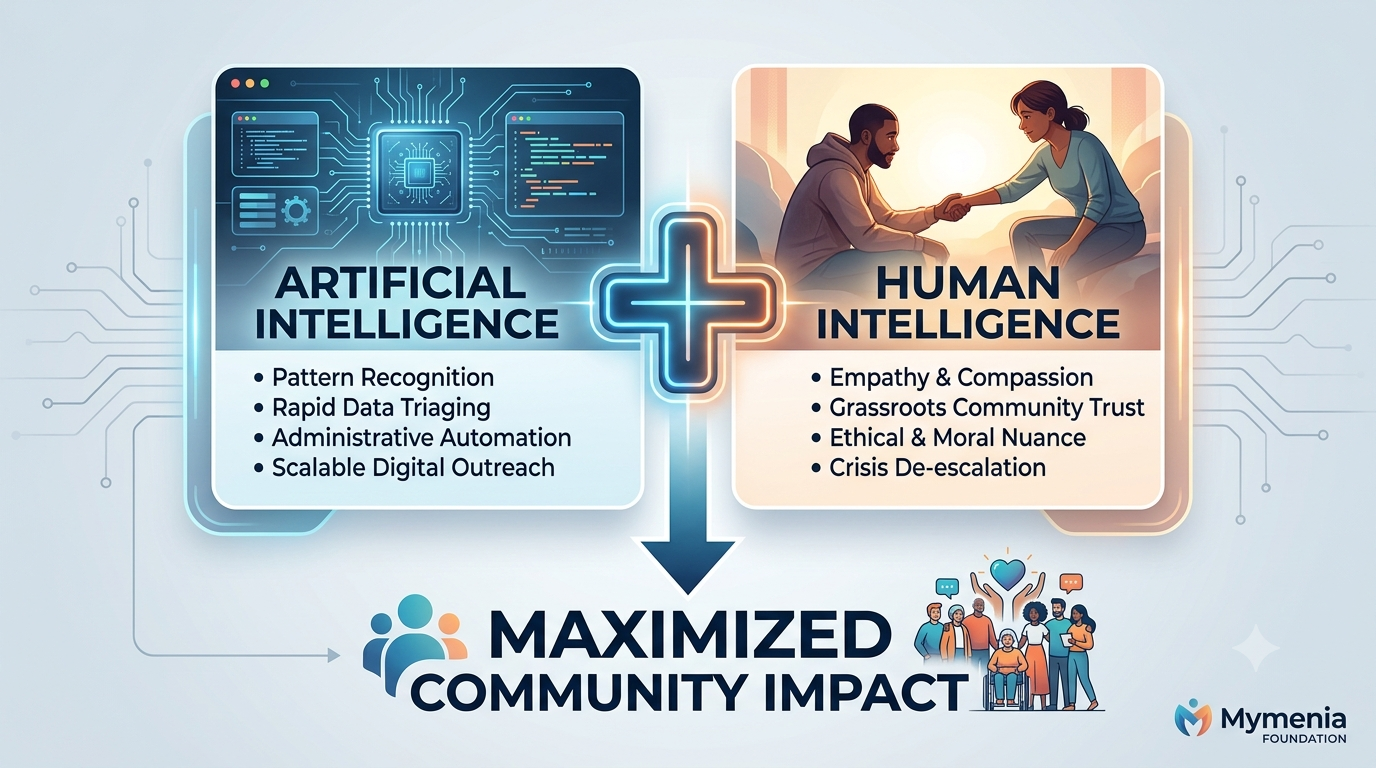
Artificial intelligence is reshaping organizational workflows at an unprecedented rate, but in the field of social welfare, technology alone cannot heal a broken community or comfort an individual in crisis.
For non-profit initiatives like the Mymenia Foundation, the central question today is not whether machines will replace human workers, but rather how artificial intelligence and human emotional intelligence can work together to tackle systemic social challenges, mental health barriers, and grassroots inequality.
The Current Reality: Where AI Excels in the Social Sector
In resource-constrained environments, administrative bottlenecks often consume valuable hours that social workers could otherwise spend directly with people. Applied thoughtfully, AI functions as a force multiplier:
• Predictive Resource Allocation:
Machine learning models analyze demographic data and service uptake trends to identify high-risk neighborhoods and underserved clusters before crises peak.
• Streamlined Casework & Documentation:
Natural language processing can synthesize case notes, auto-generate compliance reports, and organize donor updates, freeing frontline staff from routine desk work.
• Triage and Initial Touchpoints:
AI-assisted digital triage bots help field non-emergency mental health inquiries, direct individuals to local support groups, and match urgent cases with available human counselors.
• Language and Accessibility:
Real-time translation tools bridge communication divides in linguistically diverse communities, ensuring marginalized voices are understood.
The Irreplaceable Edge: Human Intelligence and Empathy
While an algorithm can process 10,000 survey responses in seconds, it cannot perceive the hesitation behind a spoken answer, interpret non-verbal trauma cues, or build genuine trust in an informal settlement.
• Contextual Nuance:
Communities are governed by informal social contracts, historical trauma, and cultural nuances that do not exist within training datasets. A seasoned social worker navigates these dynamics intuitively.
• Ethical Judgement and Advocacy:
Automated systems can amplify existing biases embedded in historical data. Human oversight ensures that interventions remain just, inclusive, and dignified.
• Emotional Presence:
Vulnerable individuals—whether a child dealing with domestic instability or an adult grappling with severe distress—need authentic human solidarity, active listening, and warmth.
The Mymenia Framework: A Human-in-the-Loop Approach
At Mymenia Foundation, our social development and community outreach efforts are guided by a human-centered technology doctrine:
• AI as the Assistant, Not the Decision-Maker:
Algorithms provide visibility and speed up logistics, but human professionals always retain final discretionary authority on individual interventions.
• Data Dignity & Privacy:
Protecting the identity and personal narratives of beneficiaries is paramount. Technological tools must abide by str
Leave a Reply